

In this article, you’ll learn:
Starting an e-commerce business sounds wonderfully simple when you read most advice online. Pick a product. Open a store. Run some ads. Post on social media. Start selling.
There are thousands of discussions on Reddit and on other social media about how to start an e-commerce business:
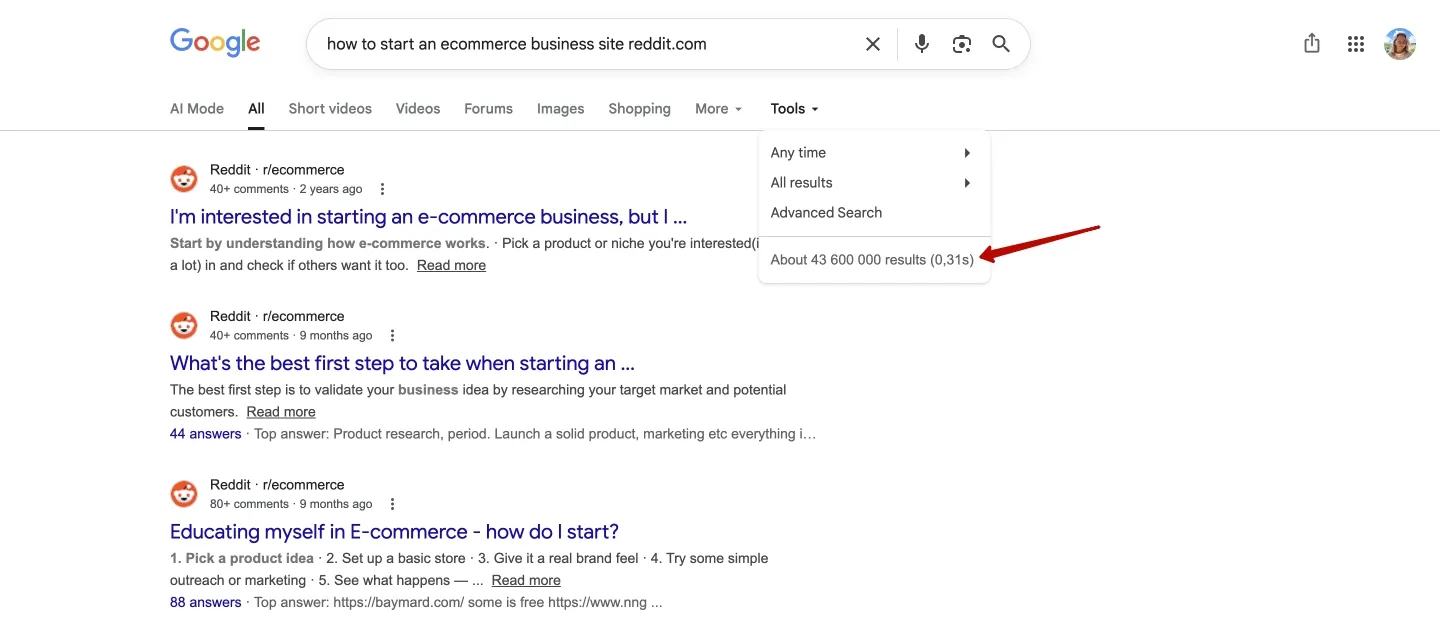
Yes, you can get a storefront live quickly. That part is easier than it used to be.
The real challenge begins once the store is live: updating product pages, solving shipping and return questions, managing multiple channels…
In this article, we will explore the challenges and opportunities you could face if you start an e-commerce business from scratch.
What Does E-commerce Mean in 2026
At a basic level, e-commerce still means selling online. But if you have ever worked inside a growing store, you know that definition hides most of the real work.
First, discovery is more fragmented now. Brands that connect products to a clear lifestyle, use creators well, or build visibility across channels get found faster. Brands that rely on a simple catalog alone are easier to overlook.
Second, customers compare more quickly and trust less automatically. They notice weak images, vague sizing, missing details, confusing returns, and inconsistent information faster than they used to. In crowded categories, those details often decide whether someone buys from you or keeps scrolling.
Third, channel complexity shows up earlier. Even relatively small brands often end up selling in several places sooner than expected. The moment that happens, product data quality stops being a background housekeeping task. It starts affecting approvals, visibility, ad efficiency, internal workload, and ultimately customer trust.
Choosing the Right E-commerce Business Model
Many beginners start with the product and only later realize they should have thought more carefully about the model behind it.
That model shapes everything.
Dropshipping and print-on-demand are still useful for testing without taking on much risk. They let you learn cheaply. What they usually do not give you is much control over margin, delivery experience, or defensibility.
Private labels and differentiated DTC become more attractive once you want stronger economics and more control over how the product is positioned.
The amount of money needed at the start depends on the chosen model. The most underestimated cost is usually not the logo or the theme. It is the messy middle after launch.
Many first-time founders spend on setup, samples, or packaging, then leave little for customer acquisition, testing, product changes, or mistakes. Products ship late. Pages underperform. Suppliers miss something. Listings need rework. That is part of the process.
The goal is not to avoid every mistake.
Finding a Niche That Can Actually Support a Business
“Find a niche” sounds useful until you try to do it. Then it becomes one of those pieces of advice that is repeated everywhere and explained nowhere.
A good niche has real demand, room for differentiation, and workable economics after fees, shipping, returns, and acquisition. So you are looking for customers with a real reason to buy.
Some of the best signals are still surprisingly ordinary: recurring complaints in reviews, products people keep trying to improve because current options are annoying, and communities where the same buying frustration keeps recurring. Search data is useful too. The better question is whether you can see a market and also explain why your version deserves attention.
Validate Demand Before You Buy Deeply
Inventory is expensive, so is confidence based on guesswork.
| Validation method | Cost | Time | What it tells you |
|---|---|---|---|
| Keyword research | Low | Hours | Whether interest exists |
| Competitor analysis | Low to medium | 1–2 days | What already sells in the category |
| Landing page plus waitlist | Low | 1 week | Whether people respond to the offer |
| Pre-sell campaign | Medium | 2–4 weeks | Whether customers will pay |
| Small test batch | Medium to high | 4–8 weeks | Whether the product works at real prices |
The closer you get to real buying behavior, the more useful the signal becomes. Surveys are easy to fake. Waitlists are better. Pre-orders are better still. A small paid test that shows whether people actually click and buy will teach you more than a long brainstorming session ever will.
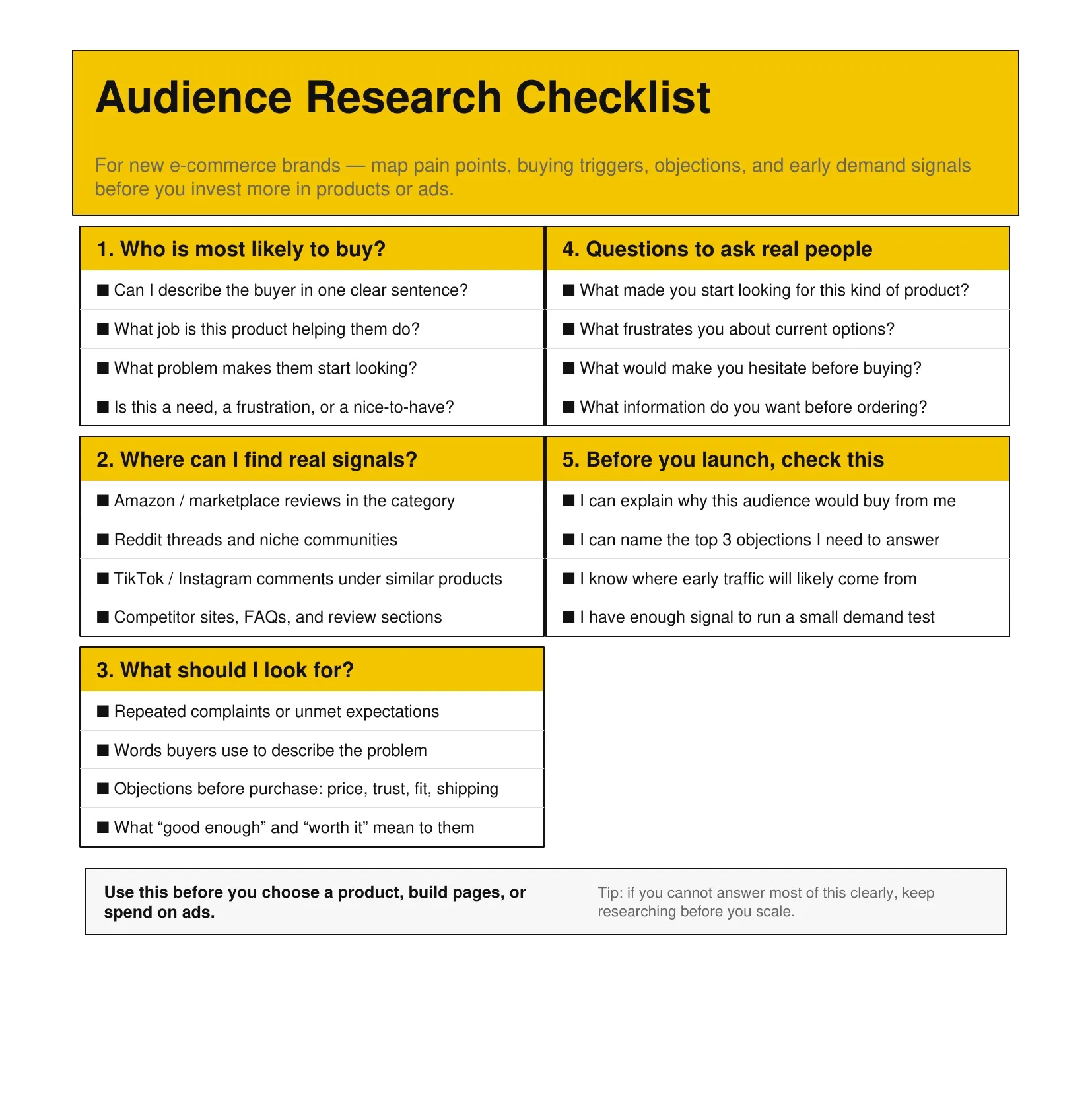
A quick audience research checklist
Before you invest more in products or ads, make sure you can answer a few basic questions. What language do potential buyers use when they describe the problem? What frustrates them about current options? What information do they need before they feel ready to buy? And where are they already looking for alternatives: Reddit, Amazon reviews, creator content, or marketplace listings?
If those answers are still vague, your next step is not scaling. It is audience research.
Your Business Plan Does Not Need to Be Long
At the start, you do not need a document for investors or a long formal business plan. You need a working answer to a few practical questions.
- Who exactly is this for?
- Why would they buy this from you instead of from someone else?
- How are they likely to discover you?
- And do the numbers still make sense after shipping, fees, returns, and marketing?
That is enough to get moving.
The point of writing this down is to catch weak assumptions before they turn into expensive decisions. A lot of early mistakes happen because founders skip this step, then try to figure out positioning, pricing, and acquisition at the same time.
Legal Setup, Taxes, and Compliance
Once money starts moving, a sloppy setup becomes annoying very quickly, and it can be very expensive. It is easy to overlook something important until it turns into a compliance issue or a fine.
So, you need a proper business structure, separate business finances, and a basic understanding of what taxes, registrations, and compliance rules apply to the markets you are selling into.
If you are selling regulated products or planning to sell across borders early, this is one of those areas where a short conversation with an accountant or lawyer can save a lot of cleanup later.
Choosing an E-commerce Platform
The platform usually matters less than people think. If you want a quick starting point, use this simple comparison:
| Platform | Best for | Cost | Technical complexity |
|---|---|---|---|
| Shopify | Most new and growing brands | Medium | Low |
| WooCommerce | Brands already invested in WordPress | Low to medium | Medium to high |
| BigCommerce | Larger catalogs, B2B, more complex selling rules | Medium to high | Medium |
| Squarespace or Wix | Simple stores with low SKU counts | Low to medium | Low |
| Adobe Commerce/ Magento | Enterprise complexity | High | Very high |
For most beginners, Shopify remains the cleanest default option. It gets you live fast, keeps technical overhead low, and has an ecosystem built to help ecommerce brands move quickly.
WooCommerce makes more sense when content is a bigger part of the strategy, or you are already comfortable with WordPress. BigCommerce becomes more interesting when catalog and B2B complexity show up earlier.
You can also start selling through Instagram or TikTok if the product and audience fit the channel.
What should be ready before launch
Before you start sending traffic to the online store, make sure the basics are in place: domain, payment setup, shipping rules, return policy, contact information, analytics, and a mobile buying flow you have tested yourself.
A store does not need to look perfect on day one. It does need to feel clear and trustworthy enough that customers can browse, buy, and understand what happens next.
Product Pages That Convert
A good product page removes doubt. When a buyer lands on a page, they should quickly find the basics: color, size, and whether the product meets their needs. They also want to easily find information about delivery details and return options if something goes wrong. Your page has to answer those questions without sounding defensive or overexplaining itself.
That means clear titles, strong images, visible pricing, useful copy, reviews, and shipping and return details close to the point of decision. But there is another layer. Product pages are also powered by data. Attributes, variants, dimensions, materials, compatibility details, and other structured fields influence not only your store but also what gets approved, displayed, and understood correctly across feeds, marketplaces, and social commerce surfaces.
Good copy helps sell the product. Good product data helps keep that product accurate wherever it appears.
The Product Data Problem Most Stores Hit as They Grow
At first, product information feels manageable — you have a small catalog, one spreadsheet. Maybe one person who remembers what changed and where. And it works well enough.
Then growth starts adding pressure in very ordinary ways: more SKUs, more variants. A marketplace feed, a second person updating listings, new attributes for ads or filters, and a push into another market. Suddenly, the same product exists in slightly different versions across systems, and nobody is entirely sure which version is current.
That is where a PIM starts making practical sense. It gives teams one place to structure, enrich, and manage product information, ensuring each channel gets the right version in the right format. That matters because manual product management gets expensive fast once the catalog and channel mix become more complex.
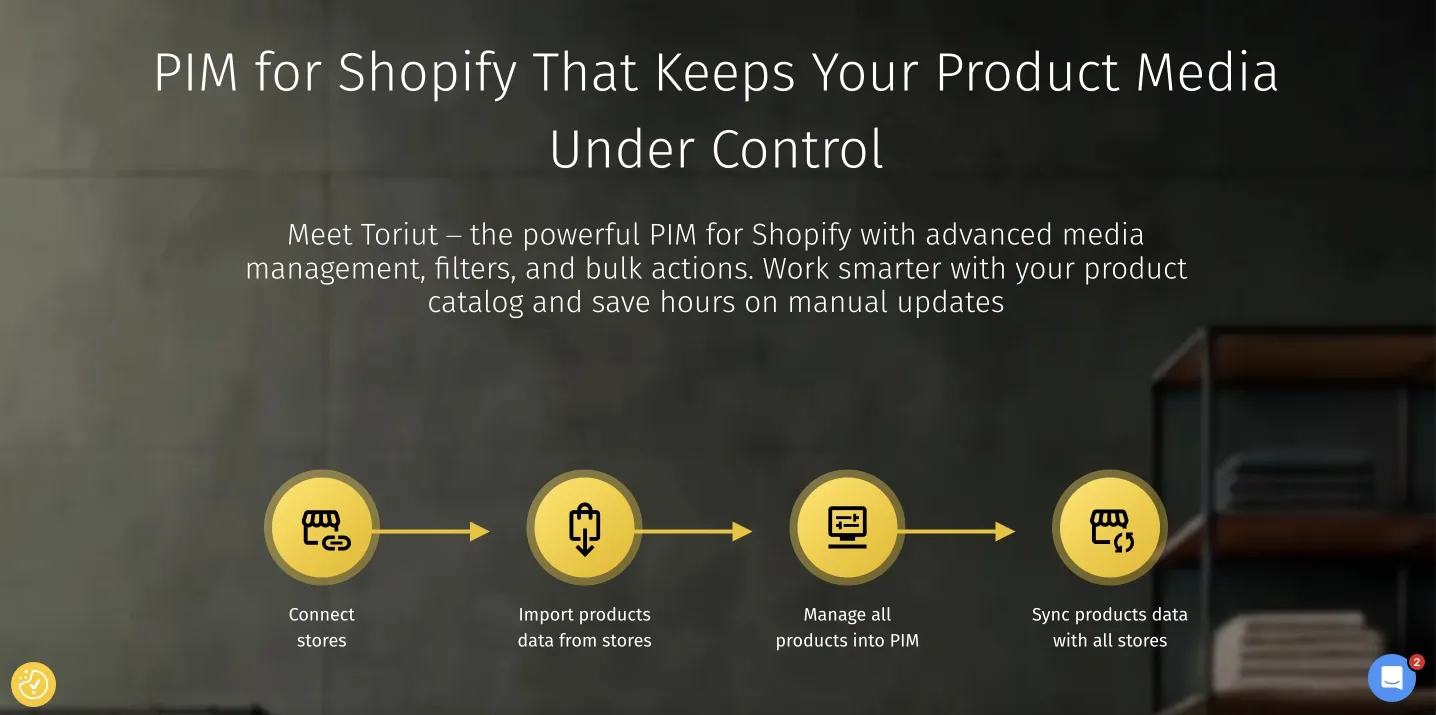
For a very small store, this may not be urgent, but for a growing brand, it often becomes one of the clearest ways to protect speed and consistency before chaos becomes normal.
Getting Your First Customers
The first stretch of e-commerce usually feels slower and more awkward than founders expect.
At this stage, you are trying to learn what actually works: which audience responds, what message gets clicks, which channel can generate sales without breaking your economics.
That usually means choosing a few focused channels instead of trying to be everywhere. Paid social can give you fast feedback for visual products, creator partnerships can work when the product demonstrates well, and email starts paying off as soon as you begin collecting intent. SEO and content are slower to deliver, but they become more valuable over time in categories where people research before buying.
A narrower test with a clear hypothesis teaches more than five half-started channels running at once.
Selling Across Multiple Channels Without Creating Chaos
Selling in more than one place can strengthen the business. It can also make it much messier, much faster.
Every channel wants product information in a slightly different way. Amazon has its own formatting logic, Google Shopping cares about feed quality and required fields, and Meta catalogs have their own rules. Your store has different priorities again. None of this is impossible, but it does add friction.
That is why multichannel growth is also a product data conversation.
When teams manage all of this by hand, growth often creates invisible drag. Merchandising takes longer. Listing errors multiply. Teams keep reworking the same product content in slightly different formats instead of improving the offer itself.
This is one of the clearest reasons growing ecommerce brands move toward a PIM. They need a structured source of truth that makes channel expansion easier, not more chaotic.
Bottom Line
Launching a store in 2026 is easier than it used to be. Keeping it manageable once orders, returns, ads, and multiple channels show up is the harder part.
Trouble starts when margins are weak, acquisition is vague, product pages do not answer enough questions, and product information gets messy as the catalog grows. So the goal is to launch in a way that gives you enough budget and flexibility to learn without creating chaos too early.
If the store stays small, simple tools may be enough for a while. Once products, channels, or markets expand, product data stops being minor admin work and becomes an operational issue. That is usually when a PIM starts to make practical sense.
FAQ
How much money do I need to start?
Usually, more than the “start for $500” advice suggests. You can test cheaply, but you still need money for ads, mistakes, updates, and learning.
Is dropshipping still worth it?
For testing, yes. For building a strong long-term brand, it is much less effective. It is better as a low-risk starting point than as the final model.
What is the best platform for beginners?
For most beginners, Shopify is the easiest starting point. It helps you launch quickly without too much technical overhead.
Do I need inventory to start?
No. But skipping inventory usually means lower margins and less control. Many brands start light and invest later, once demand is clearer.
When do I need a PIM?
Usually, when product information starts slowing the team down. More SKUs, more channels, and more people editing content are the usual triggers.
Why does product data matter so much?
Because it affects more than the product page. It shapes feeds, listings, filters, channel consistency, and customer trust.
Amazon or my own store first?
Amazon helps with reach and built-in trust. Your own store gives you more control over brand, customer relationships, and retention. They solve different problems.
What usually breaks first as a store grows?
Usually, the boring stuff: slower updates, messy listings, inconsistent data, and too many manual fixes.


